What’s Inside: A Quick Guide
- The First 5 Minutes: Your Critical Action Plan
- Why Can't I Find the Stinger? The Simple Reasons
- Home Care and Remedies (For Mild Reactions Only)
- When "Can't Find the Stinger" Means a Vet Visit (Even Without an Emergency)
- The Aftermath: Monitoring and What's Normal
- Prevention: How to Stop This From Happening Again
- Your Questions, Answered (Common Q&A)
So, your dog just got stung by a bee. You're frantically looking for that little black stinger, but it's nowhere to be seen. Sound familiar? It happens more often than you'd think. The panic is real—your pup is yelping, pawing at their face, and you're stuck wondering what on earth to do next when you can't even find the source of the problem.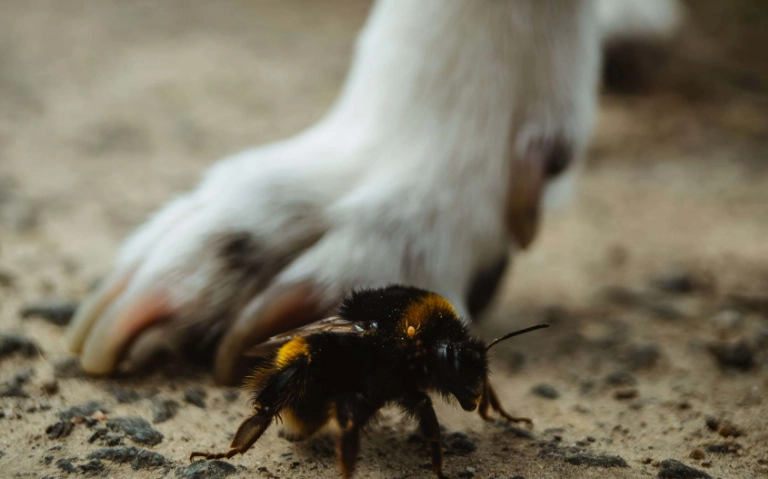
I've been there. My own Labrador, Barley, once decided a bumblebee was a fun, squeaky toy. The result was a swollen snout and a very confused human (me) searching endlessly for a stinger that seemed to have vanished. It's a scenario that sends countless pet owners scrambling to Google with questions just like yours.
The First 5 Minutes: Your Critical Action Plan
When a dog is stung by a bee and you can't find the stinger, your actions in the first few minutes are crucial. Stop the frantic search. Here's your new priority list.
Step one: Move your dog to a safe, quiet spot. Get them away from the area where it happened. More bees might be around, and your dog is already stressed. A calm environment helps you both think more clearly.
Step two: The visual check. You're not looking for the stinger anymore—you're looking for the site of the sting and your dog's overall reaction. Common spots are the nose, lips, paws (from stepping on a bee), and inside the mouth (if they tried to eat it—classic dog move). Look for:
- Localized swelling: This is the most common sign. It can look dramatic, especially on thin-skinned areas like the muzzle.
- Redness and warmth: The area will be inflamed.
- Pain: Your dog might whimper, flinch when you touch the area, or persistently paw at it.
- A tiny, central puncture mark. Sometimes you'll see this little hole even if the stinger itself is gone or embedded deep.
Step three: The behavior check. This is arguably more important than the physical site. Is your dog acting normally aside from the pain? Or are they showing signs of a systemic, allergic reaction? This distinction decides everything that comes next.
EMERGENCY SIGNS: When to Forget Everything and Go to the Vet NOW
If your dog shows any of these symptoms after a bee sting, treat it as a medical emergency. Do not wait. Do not try home remedies. Go to your vet or emergency animal hospital immediately.
- Difficulty breathing (wheezing, coughing, noisy breaths)
- Excessive drooling or vomiting
- Severe swelling that spreads to the neck, throat, or around the eyes
- Sudden weakness, collapse, or seeming disoriented
- Pale gums
- Hives or widespread itching all over the body
Anaphylactic shock can be fatal. The American Animal Hospital Association (AAHA) notes that while true anaphylaxis is less common in pets than humans, it is a rapid-onset, life-threatening condition that requires immediate professional intervention.
Why Can't I Find the Stinger? The Simple Reasons
It's frustrating, right? You know a bee stung your dog, but the evidence is missing. Let's demystify this. There are a few perfectly normal explanations.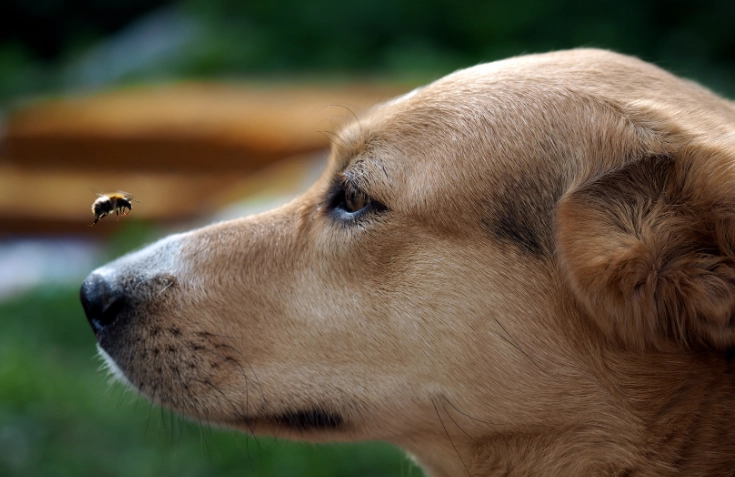
First, only honeybees leave a stinger. This is the big one. Wasps, hornets, and yellow jackets do not have barbed stingers. They can sting repeatedly and fly away, stinger intact. So if your assailant was a wasp, there never was a stinger to find. You might have a dog stung by a bee scenario, or you might have a dog stung by something else.
Second, the stinger might have fallen out. Even if it was a honeybee, the stinger and venom sac are often dislodged quickly, especially if your dog immediately rubbed their face on the ground or scratched at it. It could be in the grass somewhere.
Third, it might be buried or broken. In a furry area, a small stinger can get lost in the hair. Sometimes, only a fragment remains under the skin, which is virtually impossible to see with the naked eye.
Home Care and Remedies (For Mild Reactions Only)
If your dog is only showing localized swelling and pain—no emergency signs—you can manage this at home. The goals are to reduce swelling, ease pain, and prevent your dog from making it worse by scratching.
1. The Cold Compress. This is your best friend. Wrap an ice pack or a bag of frozen peas in a thin towel. Apply it to the swollen area for 5-10 minutes at a time, several times an hour. The cold constricts blood vessels, reducing inflammation and providing numbing relief. My dog Barley definitely appreciated this part.
2. The Baking Soda Paste. This is an old-school remedy with some logic behind it. Bee venom is acidic. Making a thick paste of baking soda and a little water and dabbing it on the sting site can help neutralize some of the residual venom on the skin surface. Don't use it on broken skin, and don't expect miracles—but it can be soothing.
3. Preventing the Scratch. A dog with an itchy, swollen face will rub it on every carpet and couch corner. If the sting is on a paw, they'll lick it incessantly. This introduces bacteria and can cause a secondary infection. Consider a soft cone (e-collar) for a few hours if they won't leave it alone. It's not cruel—it's protective.
| Remedy | What It Does | How to Apply | Important Notes |
|---|---|---|---|
| Cold Compress | Reduces swelling, numbs pain | Wrap ice in towel, apply for 5-10 min intervals | Never apply ice directly to skin. Monitor for signs of discomfort from cold. |
| Baking Soda Paste | May neutralize acidic venom on skin | Mix with water to form paste, dab on site | Rinse off after 15-20 mins. Avoid if skin is broken. |
| Oatmeal Bath (for paw/body stings) | Soothes itchy skin | Use colloidal oatmeal in cool bath, soak for 10 mins | Dry thoroughly. Good for multiple stings or general itchiness. |
| Benadryl (Diphenhydramine) | Antihistamine to reduce allergic response | VET-DOSED ONLY. Typically 1mg per pound of body weight. | CRITICAL: Only use plain Benadryl. Never use formulas with decongestants (like pseudoephedrine), which are toxic to dogs. Always confirm dose with your vet first. |
A Quick Word on Medications
You'll see a lot of advice online about giving your dog Benadryl (diphenhydramine). It can be safe and helpful for mild allergic reactions (like hives or significant swelling), but you must call your veterinarian for the correct dosage first. The standard guideline is about 1 mg per pound of body weight, but your vet knows your dog's health history. More importantly, you must use ONLY the plain diphenhydramine version. Many human cold medicines contain additional ingredients like acetaminophen or pseudoephedrine, which can kill a dog. The ASPCA Animal Poison Control Center lists human medications as a top cause of pet poisoning. When in doubt, skip it and stick to external care.
When "Can't Find the Stinger" Means a Vet Visit (Even Without an Emergency)
Sometimes, the situation isn't critical, but it still needs a professional eye. Here's when you should schedule a vet appointment, even if the initial panic has passed.
- The swelling isn't going down after 24 hours, or it's getting worse. This could indicate an infection or a persistent inflammatory response.
- The sting is in a risky location: Inside the mouth, on the eyelid, or very close to the throat. Swelling in these areas can quickly become dangerous even if it starts mild.
- Your dog is in significant pain that isn't relieved by your home care. They won't eat, drink, or settle down.
- You suspect multiple stings. A higher venom load is harder for a body to handle.
- Your dog has a known history of allergic reactions to anything, or is a brachycephalic breed (like a Bulldog or Pug). Their already-compromised breathing makes any throat swelling extra risky.
Your vet might administer a stronger anti-inflammatory injection (like a corticosteroid) or prescribe pain medication. It's about your dog's comfort and safety.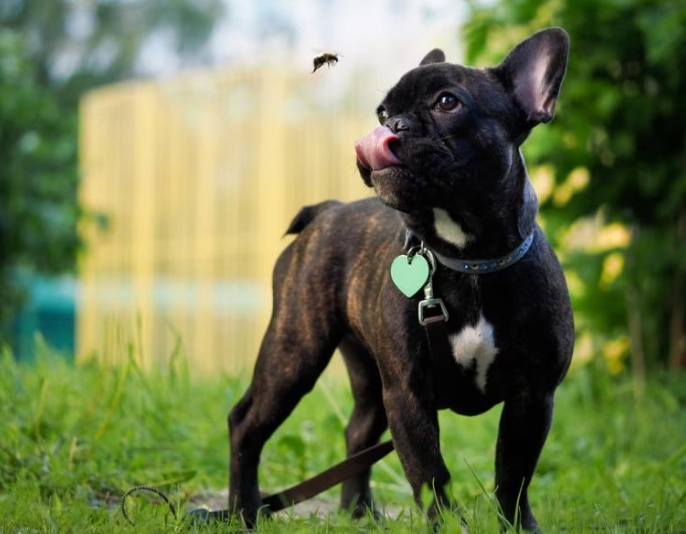
The Aftermath: Monitoring and What's Normal
Okay, the immediate crisis is over. Your dog is resting, the swelling is slowly subsiding. What now? Watch for these stages.
First 12 hours: Swelling peaks. This is normal. Keep up with cold compresses. The area may feel warm and firm. Encourage small drinks of water.
24-48 hours: Swelling should noticeably decrease. A little residual puffiness might remain for a couple of days. Your dog's energy should return to normal.
Watch for infection: This is a key later-stage risk, especially if your dog has been scratching. Signs include the swelling returning after improving, the area becoming hot and painful again, pus, or a foul odor. If you see these, it's vet time for antibiotics.
Prevention: How to Stop This From Happening Again
Once is scary enough. After Barley's adventure, I became hyper-aware. You can't bubble-wrap your dog, but you can reduce risks.
Bee-aware on walks. In spring and summer, avoid letting your dog sniff directly into flowering bushes or clover patches, which are bee hotspots. Keep them on a clear path.
Cover outdoor food and water. Bees are attracted to sweet smells and water sources. Don't leave your dog's water bowl outside for long periods without changing it, and pick up food bowls after meals.
Train a "Leave It" command. This is golden. If you see your dog focusing on a buzzing insect, a firm "leave it" can prevent the snap that leads to a sting inside the mouth. It takes practice, but it's a lifesaver.
Consider yard maintenance. If you have a nest of ground bees or wasps in your yard, call a professional exterminator to remove it safely. Don't try to handle it yourself with your dog nearby.
A Proactive Tip from a Vet Tech
I spoke to a vet tech friend after Barley's incident. Her advice? "Take a clear, well-lit photo of the swollen area when it's at its worst. If you do end up going to the vet later, it shows them the progression. Also, it helps you stay calm because you can see if it's truly getting better or worse by comparing." Simple and brilliant.
Your Questions, Answered (Common Q&A)

Look, finding yourself with a dog stung by a bee and you can't locate the stinger is a rite of passage for many pet owners. It's scary in the moment. But the missing stinger is almost always a red herring. Your job isn't to be a forensic detective; it's to be a calm, observant caregiver.
Focus on your dog's behavior, not the missing weapon. Know the emergency signs cold. Have your vet's number handy. And trust that with some cool compresses and watchful waiting, most dogs bounce back from a bee sting just fine, even if the proof—that darn stinger—is forever lost in the backyard.





Leave a comment